Published: 15 August 2026 · Updated: 15 August 2026
3 Questions About Air Purifiers in the Bedroom, Answered
Worth it for allergies and dusty homes, modest otherwise, and a 2-in-1 with a humidifier is usually a compromise. Here's the evidence on each of the three questions people ask most.
An air purifier is a worthwhile bedroom addition if allergies, dust or urban pollution are part of your nights - the trial evidence shows real gains for people who live with those. It won't fix a sagging mattress or a noisy street, and whether you also need a humidifier comes down to your symptoms, not the marketing. These three questions cover most of what people search for when they're shopping for cleaner bedroom air.
- An air purifier earns its place when allergies, dust or pollution bother you - a 2023 trial linked HEPA-filtered bedroom air to about 12 extra minutes of sleep a night
- A purifier and a humidifier do different jobs - a 2-in-1 unit usually does both worse than two separate machines
- Placement matters as much as the machine - keep it within a metre or two of the bed, clear of walls, running on low all night
- Match the unit to the room - check the CADR rating against your bedroom size and change the HEPA filter on schedule
📚 Suggested Reading: Best Air Purifiers for Bedroom UK · Humidity and Sleep Quality: A UK Guide
Is an Air Purifier Worth It in the Bedroom?
Yes, if allergies, asthma, dust or city pollution are part of your life - that's where the evidence is strongest. In a clean, dust-free bedroom with no allergy problems, the benefit is real but modest, so it isn't an automatic yes.
The sleep research makes the case. A 2023 double-blind crossover trial in the Journal of Sleep Research put 30 healthy adults through two two-week conditions: a real HEPA air purifier in the bedroom, then a placebo filter with no cleaning effect. With the real filter, total sleep time rose by an average of 12 minutes a night and time in bed by 19 minutes, and air quality in the room was measurably better. The honest caveat is that time awake after sleep onset was slightly higher in the purifier weeks, so the gains aren't universal - the authors called the results "positive indications" rather than a clean sweep.
For people with asthma, the picture is clearer. A 2024 randomised controlled trial in Clinical and Experimental Allergy put bedroom air purifiers into the homes of people with asthma and measured rhinitis symptoms and perceived sleep quality - both improved. If you wake congested or sneezing, an air purifier targets the actual cause rather than just the symptom - our air quality and sleep guide starts with the bedroom.
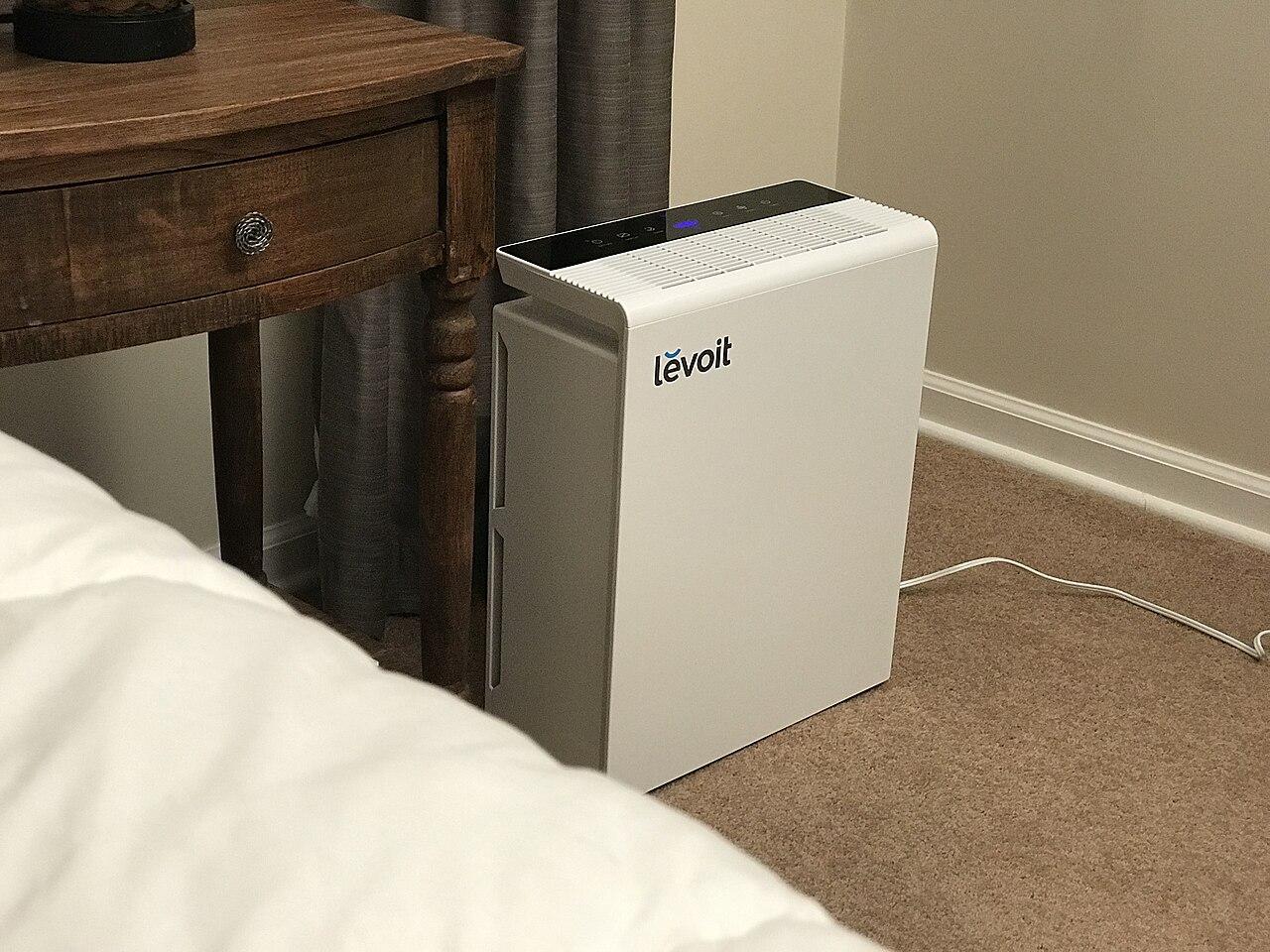
Budget-friendly units like the Levoit Core 300 Air Purifier are where most people start, and the Coway Airmega 150 is the quiet pick if you're a light sleeper. Our roundup of the best air purifiers for the bedroom compares them side by side.
Air Purifier and Humidifier for the Bedroom: Do You Need Both?
They solve different problems, so plenty of UK bedrooms end up with both - usually as two separate machines, because a 2-in-1 does each job worse than a dedicated unit.
An air purifier pulls particles out of the air: dust, pollen, pet dander, mould spores, smoke. A humidifier adds moisture to the air, which matters in British winters when central heating can push bedroom humidity down to desert levels. Research in Sleep Health looked at bedroom humidity, temperature, CO2 and noise together and found that very dry and very damp rooms both track with worse sleep, with most guidance putting the comfortable zone around 40-60% relative humidity.
So the question is really about your symptoms. Waking with a dry throat, papery nose or static sheets points to dry air and a DREO Smart 4L Humidifier or the app-controlled Levoit OasisMist 4.5L Smart Humidifier is the direct fix - our bedroom humidifier guide runs through the options. Sneezing, congestion, dust or a musty smell points to a purifier instead.
The catch with "purifier and humidifier in one" machines is that each side is usually smaller and weaker than a dedicated unit, and the water tank sits right next to the filter, which is asking for mould growth in exactly the part meant to clean the air. Separate machines, placed apart, do both jobs properly. If you do want the combo route, replace its filter more often than the manual suggests.
Where Should You Put an Air Purifier in the Bedroom?
Put it near where you breathe - within a metre or two of the head of the bed - with clear space around it, and keep the bedroom door closed while it runs.
Air purifiers pull air in from the sides and push clean air out the top, so they need breathing room. Manufacturer guidance from the likes of Blueair is consistent: place the unit close to the bed, three to five feet from the head being the usual recommendation, and keep it clear of walls and curtains so air can flow. Running it on its sleep or low setting overnight beats blasting it on high and letting it sit in a corner.
Running overnight is the whole point - that's the eight hours when your breathing happens in that room. Most units have a sleep mode that drops the fan below conversation level, and the Levoit Core 400S Smart Air Purifier or the Philips Series 2000i both have night-friendly settings plus apps that show the air-quality readout if you want that feedback.
Sizing matters more than the brand on the box. Check the CADR (clean air delivery rate) against your room size: a typical UK bedroom of around 12-15 square metres needs a unit rated for that floor area or a bit larger, because a bigger machine run on low is quieter than a small one run on high. And mark the filter change in your calendar - a clogged HEPA filter stops cleaning while the fan keeps spinning, and most units tell you when it's due.
Frequently Asked Questions
Can an air purifier help with hay fever at night?
Yes - a HEPA purifier running overnight removes pollen and dust from the bedroom air, which is exactly when hay fever symptoms peak for many people. Pair it with the advice in our hay fever and sleep guide and you'll notice the difference.
Are air purifiers safe to leave on overnight?
They're safe to run all night. HEPA purifiers are designed for continuous use and run safely for months, drawing a fraction of the power of a kettle. Just keep the unit clear of curtains and bedding so nothing blocks the airflow.
How often should I replace an air purifier filter?
Most HEPA filters last six to twelve months depending on how much you run the unit and how dusty your home is. Most machines show a filter-life indicator, and replacement filters for popular units are easy to find.
Air purifier or humidifier: which should I buy first?
Match the machine to the symptom. Waking with a dry throat, papery nose or static sheets points to a humidifier; sneezing, congestion, dust or a musty room points to a purifier. If both descriptions fit you, that's how you know you'll end up with both.
What size air purifier do I need for a UK bedroom?
Check the CADR rating rather than the price tag. For a typical UK bedroom of around 12-15 square metres, look for a unit rated for rooms of that size or larger, and remember a bigger unit run on its low setting is quieter than a small one on high.
The Bottom Line: Buy for Your Symptom
Cleaner bedroom air is one of the few sleep upgrades you can measure: the trial data shows real minutes of extra sleep for people who need it, and the cost is modest compared with a new mattress. Buy for your symptom, place the machine where you breathe, keep the filter fresh, and you've covered the essentials. For the full comparison, the best air purifiers for the bedroom guide has the shortlist, and the air quality and sleep guide goes deeper.
For more sleep guides, visit SleepReview.
James Park
Sleep Researcher · SleepReview
James Park is a sleep researcher who writes about sleep hygiene, lifestyle habits and the science of restful sleep for SleepReview. His guides focus on the practical details of the sleep environment - light, temperature, air quality and routine.
Disclaimer: This article is for informational purposes only and does not constitute medical advice. If you have persistent sleep issues or suspect a health condition, consult a qualified healthcare professional.
Last reviewed: 15 August 2026